Healthy bees from Gower to the valleys
Croeso! We're the beekeepers of Swansea and Neath Port Talbot: a friendly community with a training apiary in Penllergaer, a popular beginners' course and expert advice, whether you're new to bees or have kept them for decades.
About usAmdanom ni
Nearly 150 years of beekeeping in West Glamorgan
Founded in 1878, the West Glamorgan Beekeepers Association supports beekeepers across the County of Swansea, Neath Port Talbot and the surrounding area, formerly West Glamorgan. Our aim is to promote the craft of beekeeping by educating both beekeepers and the public. Most of us are amateur beekeepers, and membership is open to anyone with an interest in bees. We are proud members of the Welsh Beekeepers' Association.
Learn
Our well-established beginners' course combines winter theory classes with a full season of hands-on practical sessions at our training apiary.
Share
Regular members' meetings, guest speakers, practical courses and an annual honey show, plus a members' marketplace for buying and selling kit.
Protect
We collect honeybee swarms, help track Asian hornet sightings and raise awareness of the vital role bees play as pollinators.
Our patchEin hardal ni
Beekeeping in West Glamorgan
From the heather commons of Gower to the wooded slopes of the Swansea, Neath and Afan valleys, our members keep bees in back gardens, allotments, farms and hillsides right across the old county.
- Swansea
- Gower
- Mumbles
- Gorseinon
- Penllergaer
- Morriston
- Clydach
- Pontardawe
- Swansea Valley
- Neath
- Neath Valley
- Port Talbot
- Afan Valley
- Briton Ferry
What our bees forage on through the year
Early spring
Willow and blackthorn along the river valleys, gorse on the commons and dandelions everywhere.
Late spring
Sycamore, hawthorn hedges and fruit blossom in gardens and allotments, before the June gap.
Summer
Bramble, white clover and the lime trees in Swansea's parks.
Late summer
Heather on Cefn Bryn and the Gower commons, and Himalayan balsam along the Tawe and Neath.
Autumn
Ivy flowers give the colonies one last boost before winter.
Winter
Bees cluster in the hive to keep warm. On mild days they visit winter heather, mahonia and early snowdrops.
Our mild, damp coastal weather means bees can fly on bright winter days, but a wet summer can cut the honey crop short. Local knowledge matters, and that's what our members share.
Learn to keep beesDysgu cadw gwenyn
Beginners' course
Have you ever thought of keeping bees and harvesting your own honey? Our popular course starts with ten weeks of classroom sessions in spring. Then we suit you up for hands-on practical sessions at the apiary for the rest of the season. Dates below are from the 2026 course. Update them for 2027.
What you'll learn
- Life cycle of the honey bee
- Biology of swarming, swarm prevention, and catching and hiving swarms
- Hive management and equipment essentials
- Hive and frame making
- In the apiary: routine inspections, queen marking, disease and varroa control, honey extraction and preparing for winter
Course details
- Theory
- Tuesdays at 7pm for 10 weeks from 31 March 2026, Llangyfelach Church Hall
- Practical
- Sundays at 10am from 24 May 2026 until October, Training Apiary, Penllergaer
- Cost
- £110, including your first year's membership
- Under 16s
- Free when attending with a paying adult
Where to find usBle i ddod o hyd i ni
Venues
Training Apiary, Penllergaer
We run beginner and taster sessions every Sunday from 10am to 12pm, from late April through September, weather permitting. It's a unique chance for complete beginners to see a working beehive up close, and you don't have to be a member to come to a taster session.
Protective suits are provided. Please bring your own gloves (Marigolds are fine) and wellington boots. You can drive to the apiary entrance, but please wait for an instructor to arrive before going in.
Directions: add directions / map link
Llangyfelach Church Hall
2 Heol-Y-Geifr, Morriston, Swansea, SA5 7JD
Home to our beginners' theory classes, members' meetings, guest speaker events, practical courses and our annual honey show. See the events calendar for meeting dates.
What's onBeth sydd ymlaen
Events calendar
Members' meetings, talks and socials. Visitors are welcome at most events. Add the real dates, or we can link a shared Google Calendar here so the events officer can update it without touching the website.
- DecTBCSocial
Annual Christmas Dinner
The Towers Hotel, Jersey Marine · Members and partners · Booking essential
- MonthTBCTalk
Members' meeting and guest speaker
Llangyfelach Church Hall · time and topic
- SpringTBCCourse
Beginners' course begins
Llangyfelach Church Hall · Tuesdays, 7pm
- AprTBCApiary
Training apiary opens for the season
Penllergaer · Sundays 10am–12pm · Taster sessions welcome
- MonthTBCShow
Honey show
Llangyfelach Church Hall
MembershipAelodaeth
Join us
Membership runs from 1 January to 31 December. Every beekeeping membership includes Bee Diseases Insurance (BDI) for 3 colonies against American and European foulbrood until 31 December. Confirm the prices for 2027.
Full
- BDI cover for 3 colonies
- Members' meetings and talks
- Apiary sessions and advice
- Voting rights
Family
- One beekeeping member with BDI cover for 3 colonies
- Other family members join as associate members (no voting rights)
Junior
- BDI cover for 3 colonies
- Must be accompanied by a parent or guardian at all times
Beginners' course
- 10-week theory course
- A season of practical sessions
- First year's membership included
All colonies must be insured against disease. When you join, include any increase in colonies you expect during the year (including swarms), or the insurance may be invalid.
For the publicI'r cyhoedd
Do you have a honeybee swarm?
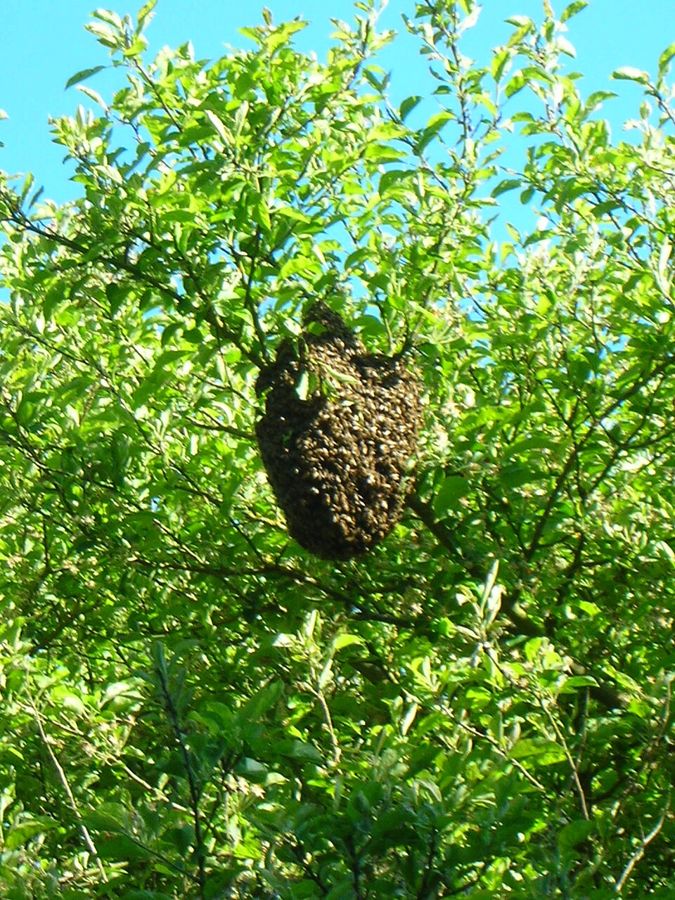
Swarming is how a colony reproduces. A swarm can look frightening, but honeybees are usually not aggressive at this stage. A cluster hanging from a branch will usually move on within a day or two. Our beekeepers are volunteers who will gladly collect honeybee swarms from accessible places.
- Stay calm and keep your distance. Don't touch or disturb the swarm, and keep children and pets away.
- Check that they're honeybees using the picker below. We can only help with honeybees. For wasps or other insects, please contact a pest control service.
- Take a photo if you can do so safely. It helps us identify the insects and plan the collection.
- Report the swarm using our form, with the exact location. A What3Words or Plus Code from Google Maps is a big help.
Bees in a building?
We can't remove established colonies from walls, chimneys, roofs or other hard-to-reach places. The British Beekeepers Association has helpful guidance on bees in buildings.
Bumblebees and solitary bees
These don't swarm and are best left alone. They're harmless, valuable pollinators and will be gone by the end of the summer.
Is it a honeybee?
Tap the insect that looks most like yours and we'll tell you what to do.
Photos from Wikimedia Commons: Honeybee by John Severns (Severnjc) (public domain); Bumblebee by Charles J. Sharp (CC BY-SA 4.0); Wasp by Soebe (CC BY-SA 3.0); Asian hornet by Charles J. Sharp (CC BY-SA 4.0). Not sure? Send us a photo with your swarm report and we'll identify it.
Bee healthIechyd gwenyn
Asian hornets (Vespa velutina)
The Asian, or yellow-legged, hornet is an invasive species and a serious threat to honeybees. It is smaller than our native hornet: workers are about 25mm long and queens about 30mm. The abdomen is mostly black, with a single yellow band on the fourth segment, and it has distinctive yellow legs and an orange face.
Do not disturb an active nest.
Report a sighting with a photo
- Use our sighting form
- Use the Asian Hornet Watch app (iPhone and Android)
- Report online at nonnativespecies.org/alerts/asianhornet
- Email alertnonnative@ceh.ac.uk
Beekeepers: please register your apiaries on BeeBase so you receive alerts about pests and disease nearby.
For beekeepersI wenynwyr
Resources
Practical guides from our members. Link each card to the full article once it has been moved across from the old site.
The beekeeper's calendar
What to do month by month. The beekeeping year really starts in September, when the honey comes off.
Starting your first hive
Practical advice for your first colony and first season.
Equipment for beginners
What you need, what you don't, and what to buy first.
Buying second-hand kit
Used equipment can be a minefield. Here's what to check and how to clean it, and why you should bring an experienced beekeeper along.
Pests and diseases
Recognising varroa, foulbrood and other threats, and what to do about them.
Bee documents
Forms, guidance notes and association documents.
Members' marketplace
Buying or selling bees or equipment? Email forsale@wgbka.org.
Class of 2024 and 2025
Stories and photos from our recent beginners' cohorts.
Get in touchCysylltwch â ni
Contact us
Use the right form and your message goes straight to the right person.
Report a swarm
We can only deal with honeybees in accessible locations. A volunteer will be in touch as soon as possible.
Report an Asian hornet sighting
Please don't disturb an active nest. Also report your sighting to the national alert service using the Asian Hornet Watch app or nonnativespecies.org.
Join / register for the beginners' course
Fill in your details and choose your membership. We'll be in touch about payment.
General enquiry
Questions, talks for schools or groups, or anything else.